
Table of content
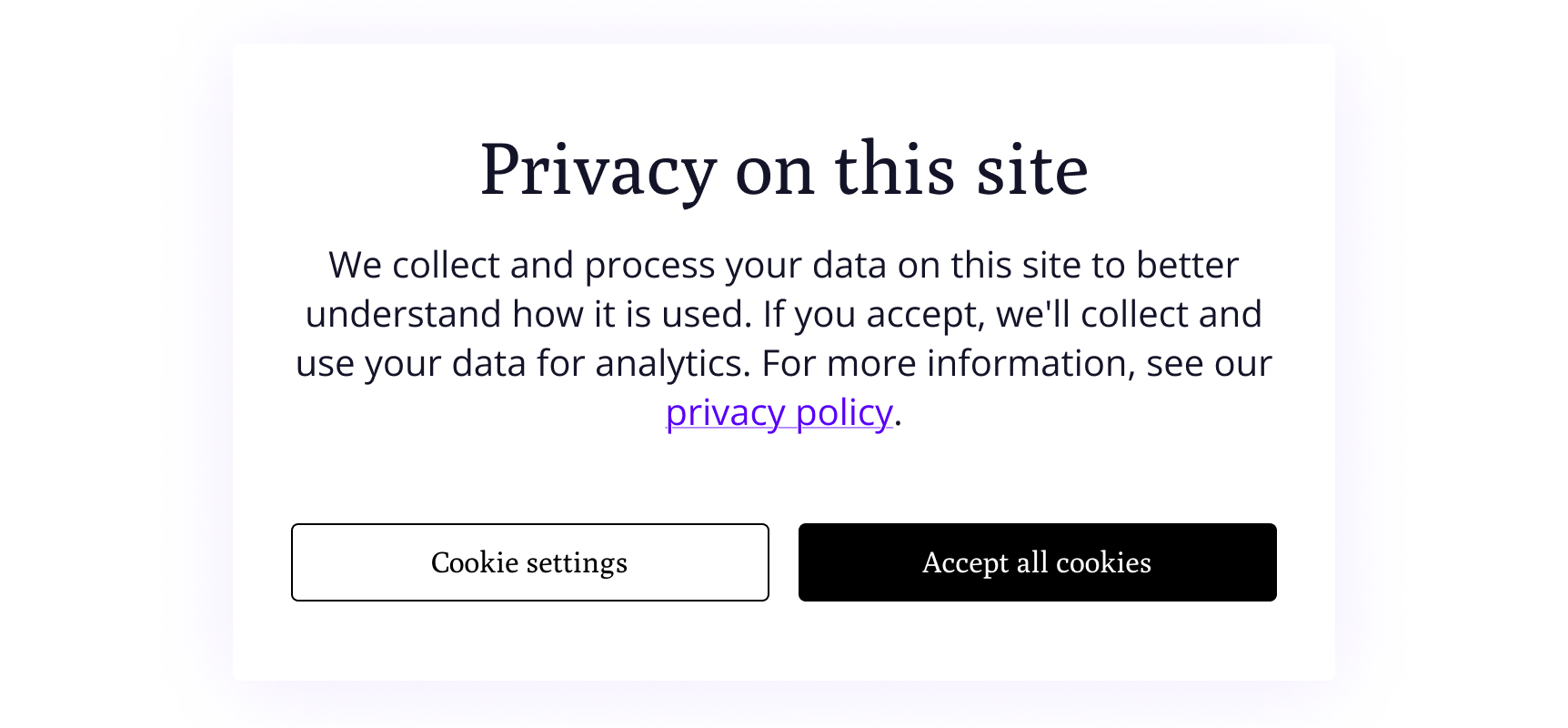
Since the establishment of privacy laws like GDPR and ePrivacy Directive, cookie banners have become a requirement for all websites, and a critical barrier for data collection and user trust. However, statistically the consent rates are very low, and a non-optimized banner could cost the business valuable data and even drive the users completely away from the website. It has become fundamental to have a high-performing cookies banner, that can encourage the user to opt in, while staying compliant with regulations. In this article, we will explore the factors that influence user decisions, best practices for banner optimization, and actionable strategies to improve your consent rates.
Table of Contents
Since the establishment of privacy laws like GDPR and ePrivacy Directive, cookie banners have become a requirement for all websites, and a critical barrier for data collection and user trust. However, statistically the consent rates are very low, and a non-optimized banner could cost the business valuable data and even drive the users completely away from the website. It has become fundamental to have a high-performing cookies banner, that can encourage the user to opt in, while staying compliant with regulations. In this article, we will explore the factors that influence user decisions, best practices for banner optimization, and actionable strategies to improve your consent rates.
Understanding Cookie Consent and Its Importance
Cookie consent is a user’s permission for a website to collect and store their data through cookies. Websites typically request consent via banners, allowing users to accept, reject, or customize their cookie preferences. A clear and compliant cookie consent process helps build trust while ensuring legal compliance.
This consent is also required by law in Europe by the GDPR and using a non-compliant method of storing cookies could result in substantial fines and damages to the brand reputation. Beyond compliance, low consent rates impact business research, making it harder to track visitor behavior, personalize content, and run targeted campaigns.
Key Factors That Influence Cookie Consent Rates
To optimize cookie consent rates, businesses must focus on design, wording, and compliance.
- Design and UX
The design of the banner can determine a lot. It’s important to have the banner immediately noticed by the user, so that they can make their choice. It’s common to place the banner at the bottom of the page or in the middle as a popup; this way the user will not move on to the next page without making this choice.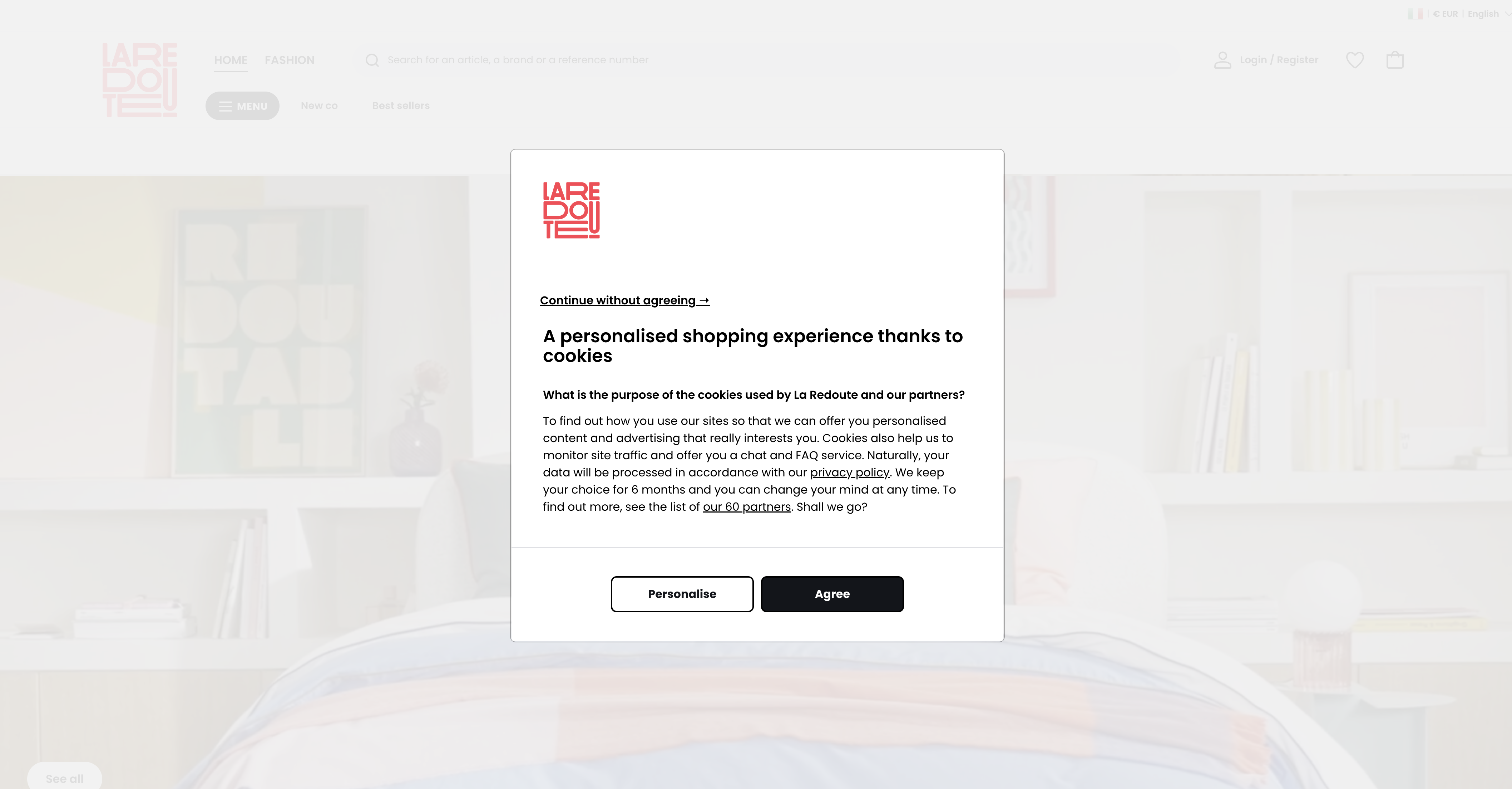
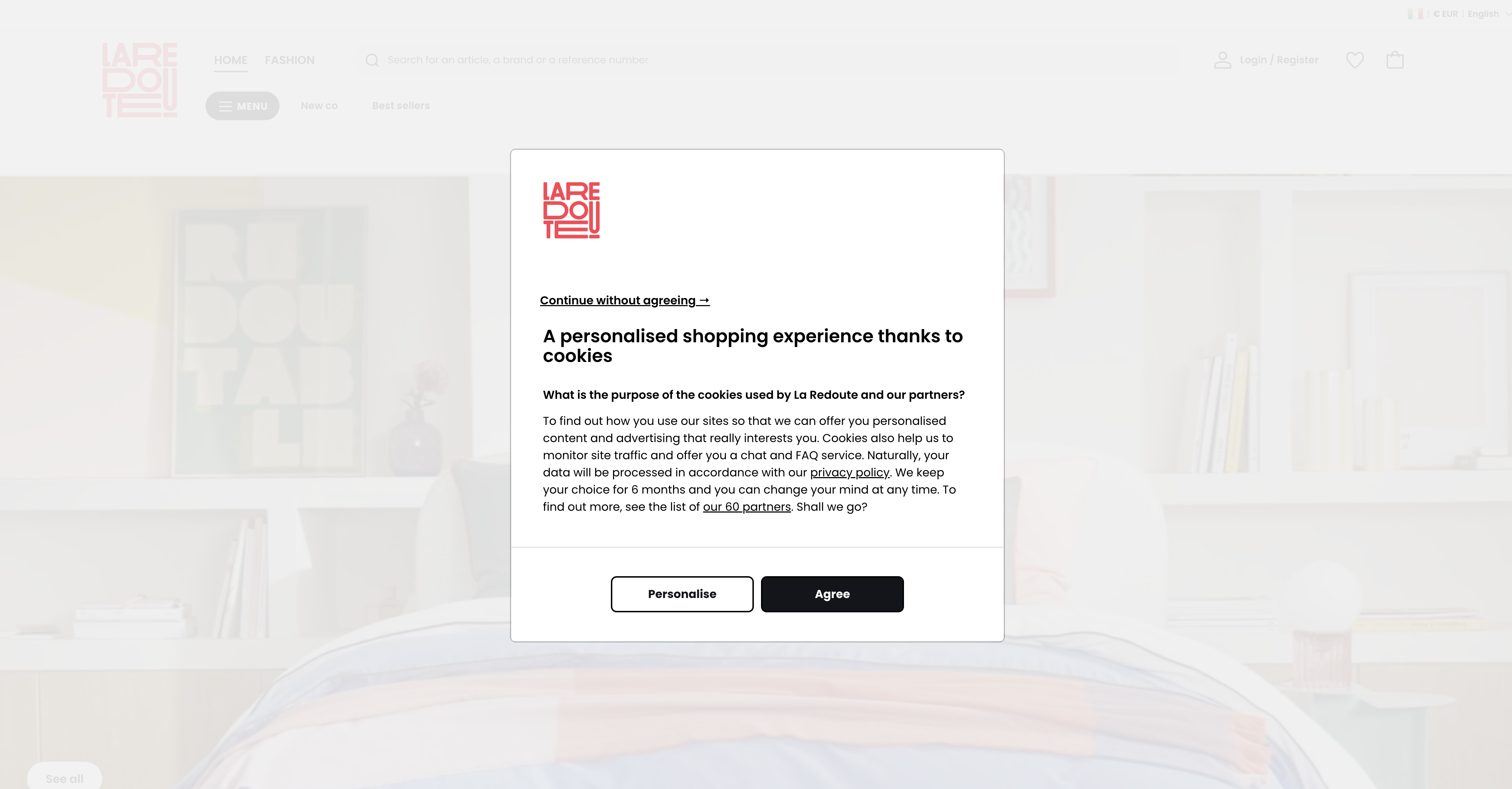
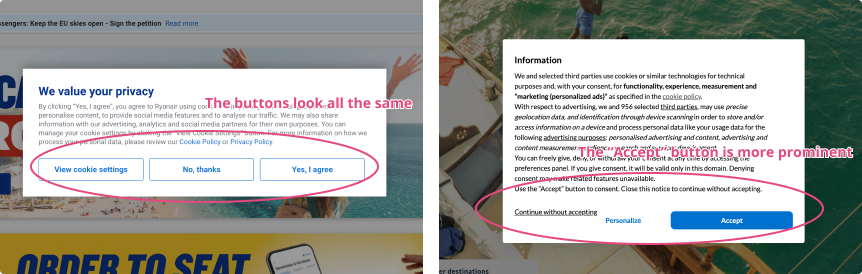
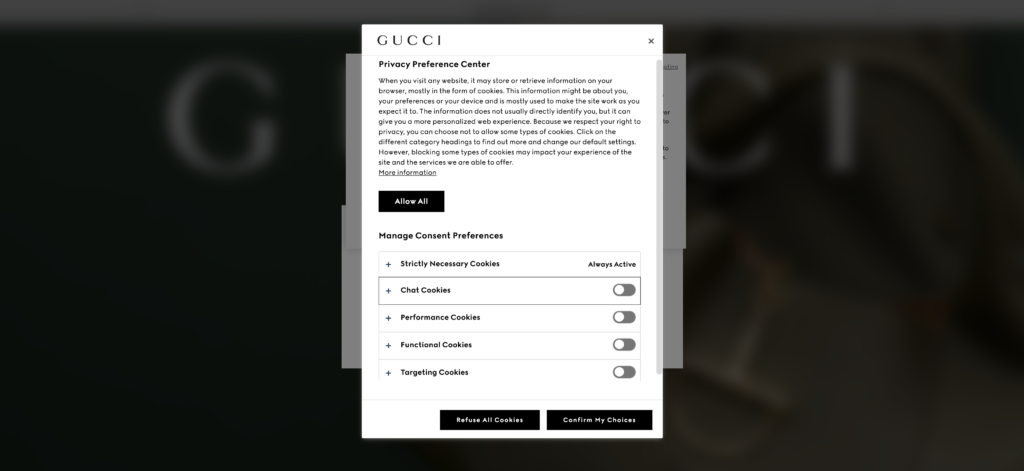
Another important factor in the UX of a cookie banner is the buttons. Nudging techniques like making the “accept” button more prominent than the others (while still having the decline and setting options clearly visible) have been proved to increase consent and trust rates.
To summarize, the banner should be visible but non-intrusive, with an intuitive layout and clear buttons.
- Wording and transparency
A clear and short message on what cookies are and why they are being tracked, increases acceptance rates significantly more than a long technical explanation that the user might find frustrating to follow. It helps to also give the user a reason to accept, such as remembering login informations and automatically input data into forms. - Choice architecture
It’s best practice to give clear distinction on what type of cookies to accept, such as functional, analytical, and advertising, so that the user can easily opt in or out of what they prefer.
- Timing and interaction
It’s best to show the banner immediately on load of the page so that the user will not visit the website without having made a choice, thus making impossible to track their data. - Trust signals
Certifications and compliance badges reassure users about data security, making the choice to accept more trustworthy for them.
To avoid common mistakes, businesses should:
- Keep messaging simple rather than overwhelming users with excessive information.
- Make consent options accessible, avoiding hidden settings or forcing users into lengthy menus.
- Avoid disruptive pop-ups that negatively impact user experience.
- Stay compliant with regional regulations to prevent legal issues and maintain trust.
By applying these principles, businesses can create an effective cookie consent banner that maximizes opt-in rates while ensuring transparency and compliance.
Examples of High-Converting Cookie Banners